


Some pieces of nature feel almost static—like they can be fully understood in a single glance.
The Blue Banded Morpho isn’t one of them.
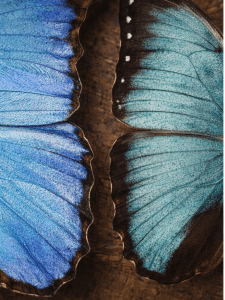
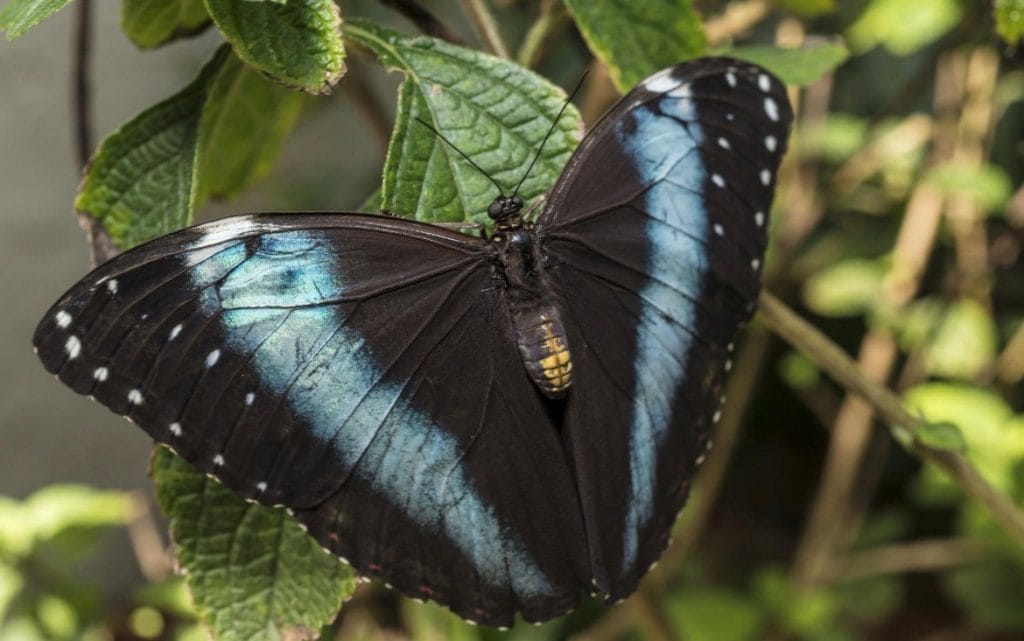
At first, you notice the contrast. Deep, earthy tones layered with a band of electric blue that seems to glow against the darker wings. But the longer you look, the more it shifts. The color softens, intensifies, disappears, and reappears depending on how the light moves across it.
It’s not just something you see.
It’s something you experience.
✨
The Science Behind That Electric Blue
What makes morpho butterflies so captivating isn’t just their color—it’s the fact that the color isn’t really there in the way we expect.
The blue seen in morpho butterflies is a result of structural coloration, not pigment. Tiny microscopic ridges on the wings reflect and scatter light, creating that vivid, almost metallic blue effect.
If you want to go deeper into the science, the Natural History Museum explains how morpho butterflies create their color in a way that’s surprisingly accessible—and it makes you appreciate just how intricate these wings really are.
Because of this structure, the Blue Banded Morpho doesn’t look the same from every angle. It changes depending on where you stand, how the light hits it, and even the time of day.
That’s part of what makes it feel alive—even in a preserved form.
🌿
A More Grounded Kind of Beauty
Compared to other morphos, the Blue Banded Morpho feels more restrained.
Where the Blue Morpho is bold and expansive—wings flashing bright blue across their full surface—the Blue Banded Morpho is more controlled. The darker background tones give it weight, while that band of blue becomes the focal point.
It’s not trying to dominate a space.
It draws you in instead.
This balance makes it especially versatile in a home setting. It works just as well in a clean, modern space as it does in something more warm and layered.
🖼️
A Thoughtful Pairing: Blue Morpho + And the Blue Banded Morpho Achilles
We recently added a new framed piece that pairs these two species together:
👉 View the Blue Morpho + Morpho Achilles Frame
This pairing wasn’t accidental—it’s built on contrast and complement.
- The Blue Morpho delivers that unmistakable, full-wing flash of iridescent blue
- The Blue Banded Achilles Morpho introduces structure, depth, and a more subtle visual rhythm
Together, they create a composition that feels complete without feeling crowded.
There’s a natural balance to it—light and shadow, bold and restrained, movement and stillness.
🔍
Why Morpho Butterflies Continue to Fascinate
Morpho butterflies have long been among the most studied and admired butterflies in the world—not just for their beauty, but for how they interact with light and perception.
According to the Encyclopaedia Britannica overview of morpho butterflies, their shimmering blue coloration may even play a role in communication and predator avoidance in the wild.
That flashing blue isn’t just for us—it’s functional.
And when you bring a piece like this into your home, you’re not just adding décor. You’re bringing in something that has a story rooted in biology, evolution, and survival.
🦋
More Than Décor: Why Pieces Like This Last
Most wall art is designed to fill a space temporarily.
It follows trends. It matches a color palette. And eventually, it gets replaced.
Natural pieces—especially preserved specimens—tend to operate differently.
They don’t rely on trends to stay relevant. They carry their own sense of permanence. And because they interact with light and perspective, they don’t feel static over time.
The Blue Banded Morpho is a perfect example of that.
You might notice the color first.
Later, you notice the structure.
Then the contrast.
Then how it looks different in the morning versus the evening.
It keeps revealing itself.
💙
A Piece That Feels Intentional
There’s a difference between decorating a space and curating one.
Pieces like this fall into the second category.
They don’t need to be rotated out seasonally. They don’t compete for attention. They simply exist in a space in a way that feels considered and complete.
If you’re drawn to natural elements, to texture, to subtle movement—this is the kind of piece that quietly transforms a room.

Strange Butterfly Superstitions Around the World
Butterfly superstitions have existed around the world for centuries. These delicate insects may be symbols of beauty and transformation today, but folklore has also cast

On the Road with The Butterfly Connection
When people visit The Butterfly Connection at a fair or show, they’re seeing more than just a booth filled with beautiful butterflies—they’re seeing the result
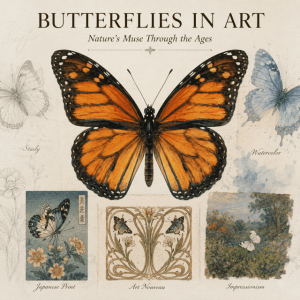
Butterflies in Art: Where Science Meets Beauty
Butterflies Have Been Artists’ Subjects for Centuries Long before cameras existed, artists played an essential role in documenting the natural world. Butterflies, with their remarkable
How Museum Butterfly Collections Help Protect Species for Future Generations
When most people walk through a natural history museum, they see beautiful displays of butterflies carefully arranged in glass cases. What many don’t realize is