There’s something poetic about the idea that a butterfly, drifting quietly through a garden, could somehow influence something far larger than itself. It’s one of those concepts that has lingered in popular culture for decades, inspiring movies, books, and endless conversations about how connected everything in the universe really is.
You’ve probably heard the phrase before: “A butterfly flapping its wings in one part of the world could eventually cause a tornado somewhere else.”
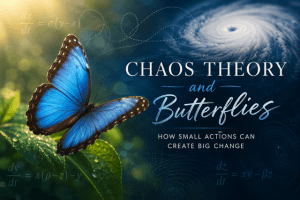
That idea comes from the famous “butterfly effect,” a concept rooted in chaos theory. While scientists don’t literally mean a single butterfly creates a storm on its own, the metaphor perfectly captures how incredibly small actions can ripple outward into enormous consequences.
And honestly? Butterflies are the perfect symbol for it.
What Is the Butterfly Effect?
The butterfly effect became widely known through meteorologist and mathematician Edward Lorenz in the 1960s. While working on weather prediction models, Lorenz discovered something fascinating: tiny changes in starting conditions could completely alter the outcome of a system.
In simple terms, even the smallest variation could send events down an entirely different path.
That realization changed how scientists thought about weather, ecosystems, economics, and even human behavior. It also gave the world one of its most memorable metaphors: the butterfly.
Butterflies became symbolic of interconnectedness, unpredictability, and the idea that seemingly small things matter more than we realize.
Why Butterflies Became the Symbol
Butterflies already carry deep symbolic meaning across cultures. They represent transformation, fragility, rebirth, hope, and change. Pair that symbolism with chaos theory, and suddenly the butterfly becomes more than just an insect.
It becomes a reminder that:
- Small actions can have lasting effects
- Nature is deeply interconnected
- Beauty and fragility can still hold immense power
- Tiny moments often shape larger stories
There’s something especially fitting about this symbolism when you watch a butterfly in motion. Their flight appears random and delicate, yet every movement serves a purpose in nature — pollination, migration, survival, reproduction, and maintaining ecological balance.
Even the smallest species plays a role in a much larger system.
Nature’s Interconnected Web
The butterfly effect isn’t just philosophical. In nature, interconnected systems are very real.
Butterflies help pollinate flowers and support ecosystems that countless other species rely on. Their populations can even serve as indicators of environmental health. A decline in butterflies often signals broader ecological problems long before humans notice them.
Organizations like North American Butterfly Association and Monarch Joint Venture continue educating the public about the importance of protecting butterfly habitats and pollinator corridors.
One missing native plant species can affect caterpillars. Fewer caterpillars impact birds. Fewer pollinators affect flowers and crops. One small shift can ripple outward in ways we may never fully see.
That’s chaos theory playing out in the natural world.
A Butterfly on Your Wall Can Mean Something Too
For many collectors and nature enthusiasts, framed butterflies are more than décor. They become conversation pieces that carry meaning and curiosity into a space.
A framed specimen can remind us to slow down, pay attention, and appreciate the details that often go unnoticed. In a fast-moving world, butterflies have a way of making people pause.
At The Butterfly Connection, we’ve always loved that balance between science, symbolism, and natural beauty. Every species has its own story — from brilliant tropical morphos to delicate swallowtails that seem almost painted by hand.
Sometimes the smallest things really do leave the biggest impression.
If you’re looking to bring a little of that wonder into your home, explore our collection of real framed butterfly art featuring species from around the world.
Final Thoughts
Maybe the butterfly effect resonates with people because it feels true beyond mathematics and weather models.
One conversation changes a life.
One decision redirects a future.
One small act creates momentum we never expected.
And maybe that’s why butterflies continue to fascinate us. They remind us that even the most delicate things can shape the world in extraordinary ways.