



Some butterflies are beautiful.
Others become legendary.
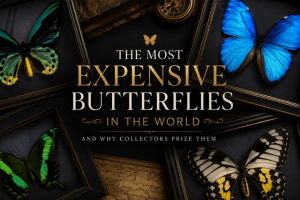
The world’s most expensive butterflies are prized for far more than color alone. Size, rarity, wing condition, iridescence, and even the story behind the species can turn a specimen into something collectors spend years searching for.
In fact, some of the rarest and most expensive butterflies in the world have become icons among natural history collectors, artists, museums, and luxury décor enthusiasts alike.
At The Butterfly Connection Shop, we’ve seen firsthand how people are drawn to real butterfly displays because no print or photograph fully captures the texture and shimmer of actual wings under light.
What Makes a Butterfly Valuable?
Collectors usually look at several factors when determining value:
- Species rarity
- Wing size
- Color intensity
- Symmetry
- Preservation quality
- Geographic origin
- Historical demand
And yes, tiny imperfections matter.
A small tear along the wing edge or missing antenna can dramatically change how desirable a specimen is to serious collectors.
Some butterflies are also notoriously difficult to preserve without losing scales or fading coloration, which makes pristine examples especially sought after.
Queen Alexandra’s Birdwing: The Giant of the Butterfly World
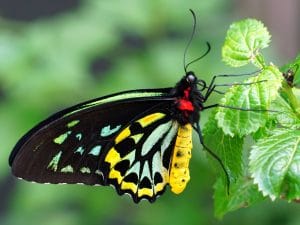
The Queen Alexandra’s birdwing is widely considered one of the most famous and valuable butterflies on Earth.
Native to Papua New Guinea, this enormous species can reach wingspans close to 11 inches. Females are massive and dramatic, while males display iridescent blue-green coloring that almost looks unreal in sunlight.
Because the species is protected and extremely rare, legally obtained historical specimens are exceptionally difficult to find.
For butterfly collectors, owning a specimen tied to such legendary status is part of the appeal.
According to The Natural History Museum, it remains the largest butterfly species in the world.
Blue Morphos and Their Electric Color
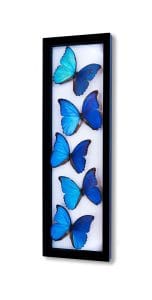
The famous Blue morpho butterfly may be one of the most recognizable butterflies ever discovered.
What makes them fascinating is that their bright blue color is actually created by microscopic wing structures that reflect light — not blue pigment.
That’s why a blue morpho can suddenly flash electric blue when viewed from different angles.
It’s also one reason framed morpho displays remain some of the most eye-catching pieces in butterfly art collections.
If you’ve browsed the framed butterfly collection, you’ve probably noticed how dramatically morpho wings react to lighting in photographs alone. In person, the effect is even stronger.
The Rare and Elusive Kaiser-i-Hind
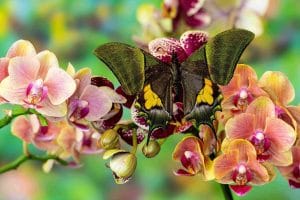
The Kaiser-i-Hind has fascinated collectors for generations.
Its metallic emerald-green markings earned it a name that roughly translates to “Emperor of India,” and pristine specimens have historically been difficult to obtain because the butterfly inhabits remote mountainous regions.
Collectors often describe seeing one for the first time as unforgettable.
And honestly, it’s easy to understand why.
Why Real Butterfly Art Feels Different
There’s something about authentic butterfly wings that photographs struggle to replicate.
The texture changes under light. Colors shift slightly as you move past the frame. Tiny details appear that you don’t notice at first glance.
That natural variation is part of what makes real specimens feel more like functional natural art than mass-produced décor.
A professionally framed butterfly becomes both a conversation piece and a preserved moment of nature.
Collecting Butterflies Has Become Modern Again
Butterfly displays aren’t limited to museums or antique collections anymore.
You’ll now find framed specimens in:
- Modern homes
- Dark academia interiors
- Nature-inspired offices
- Curiosity collections
- Boutique hotels
- Creative studios
Part of the appeal is that no two pieces ever feel completely identical.
That uniqueness matters to collectors.
Especially now, when so much home décor feels mass-produced and interchangeable.
Final Thoughts
Butterflies sit in a strange place between science and art.
They’re delicate, temporary, and incredibly fragile — yet somehow capable of leaving a lasting impression decades after preservation.
Maybe that’s why collectors continue searching for the rarest species in the world.
Or maybe it’s simply because nature occasionally creates something so visually extraordinary that people can’t stop looking at it.
Some butterflies are beautiful.
Others become legendary.
The world’s most expensive butterflies are prized for far more than color alone. Size, rarity, wing condition, iridescence, and even the story behind the species can turn a specimen into something collectors spend years searching for.
In fact, some of the rarest and most expensive butterflies in the world have become icons among natural history collectors, artists, museums, and luxury décor enthusiasts alike.
At The Butterfly Connection Shop, we’ve seen firsthand how people are drawn to real butterfly displays because no print or photograph fully captures the texture and shimmer of actual wings under light.
What Makes a Butterfly Valuable?
Collectors usually look at several factors when determining value:
- Species rarity
- Wing size
- Color intensity
- Symmetry
- Preservation quality
- Geographic origin
- Historical demand
And yes, tiny imperfections matter.
A small tear along the wing edge or missing antenna can dramatically change how desirable a specimen is to serious collectors.
Some butterflies are also notoriously difficult to preserve without losing scales or fading coloration, which makes pristine examples especially sought after.
Queen Alexandra’s Birdwing: The Giant of the Butterfly World
The Queen Alexandra’s birdwing is widely considered one of the most famous and valuable butterflies on Earth.
Native to Papua New Guinea, this enormous species can reach wingspans close to 11 inches. Females are massive and dramatic, while males display iridescent blue-green coloring that almost looks unreal in sunlight.
Because the species is protected and extremely rare, legally obtained historical specimens are exceptionally difficult to find.
For butterfly collectors, owning a specimen tied to such legendary status is part of the appeal.
According to The Natural History Museum, it remains the largest butterfly species in the world.
Blue Morphos and Their Electric Color
The famous Blue morpho butterfly may be one of the most recognizable butterflies ever discovered.
What makes them fascinating is that their bright blue color is actually created by microscopic wing structures that reflect light — not blue pigment.
That’s why a blue morpho can suddenly flash electric blue when viewed from different angles.
It’s also one reason framed morpho displays remain some of the most eye-catching pieces in butterfly art collections.
If you’ve browsed the framed butterfly collection, you’ve probably noticed how dramatically morpho wings react to lighting in photographs alone. In person, the effect is even stronger.
The Rare and Elusive Kaiser-i-Hind
The Kaiser-i-Hind has fascinated collectors for generations.
Its metallic emerald-green markings earned it a name that roughly translates to “Emperor of India,” and pristine specimens have historically been difficult to obtain because the butterfly inhabits remote mountainous regions.
Collectors often describe seeing one for the first time as unforgettable.
And honestly, it’s easy to understand why.
Why Real Butterfly Art Feels Different
There’s something about authentic butterfly wings that photographs struggle to replicate.
The texture changes under light. Colors shift slightly as you move past the frame. Tiny details appear that you don’t notice at first glance.
That natural variation is part of what makes real specimens feel more like functional natural art than mass-produced décor.
A professionally framed butterfly becomes both a conversation piece and a preserved moment of nature.
Collecting Butterflies Has Become Modern Again
Butterfly displays aren’t limited to museums or antique collections anymore.
You’ll now find framed specimens in:
- Modern homes
- Dark academia interiors
- Nature-inspired offices
- Curiosity collections
- Boutique hotels
- Creative studios
Part of the appeal is that no two pieces ever feel completely identical.
That uniqueness matters to collectors.
Especially now, when so much home décor feels mass-produced and interchangeable.
Final Thoughts
Butterflies sit in a strange place between science and art.
They’re delicate, temporary, and incredibly fragile — yet somehow capable of leaving a lasting impression decades after preservation.
Maybe that’s why collectors continue searching for the rarest species in the world.
Or maybe it’s simply because nature occasionally creates something so visually extraordinary that people can’t stop looking at it.
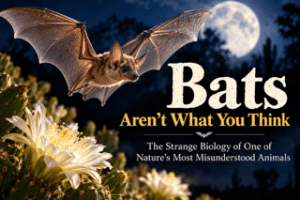
Bats Aren’t What You Think: The Strange Biology of One of Nature’s Most Misunderstood Animals
There are few animals with a worse public-relations problem than the bat. For centuries, bats have been associated with darkness, vampires, haunted houses, bad omens

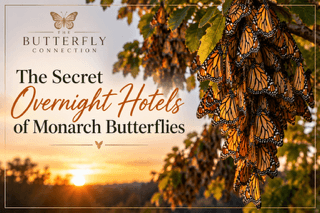
The Secret Overnight Hotels of Monarch Butterflies
The Secret Overnight Hotels of Monarch Butterflies Imagine walking past an ordinary-looking tree at sunset. At first, nothing seems unusual. Then you notice something hanging
Scientists Are Putting Tiny Transmitters on Monarch Butterflies—Here’s What They’re Discovering
Imagine trying to follow a butterfly. Not for a few minutes through a garden, but for miles—as it crosses neighborhoods, farmland, highways and eventually entire
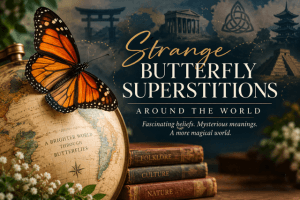
Strange Butterfly Superstitions Around the World
Butterfly superstitions have existed around the world for centuries. These delicate insects may be symbols of beauty and transformation today, but folklore has also cast
Some butterflies are beautiful.
Others become legendary.
The world’s most expensive butterflies are prized for far more than color alone. Size, rarity, wing condition, iridescence, and even the story behind the species can turn a specimen into something collectors spend years searching for.
In fact, some of the rarest and most expensive butterflies in the world have become icons among natural history collectors, artists, museums, and luxury décor enthusiasts alike.
At The Butterfly Connection Shop, we’ve seen firsthand how people are drawn to real butterfly displays because no print or photograph fully captures the texture and shimmer of actual wings under light.
What Makes a Butterfly Valuable?
Collectors usually look at several factors when determining value:
- Species rarity
- Wing size
- Color intensity
- Symmetry
- Preservation quality
- Geographic origin
- Historical demand
And yes, tiny imperfections matter.
A small tear along the wing edge or missing antenna can dramatically change how desirable a specimen is to serious collectors.
Some butterflies are also notoriously difficult to preserve without losing scales or fading coloration, which makes pristine examples especially sought after.
Queen Alexandra’s Birdwing: The Giant of the Butterfly World
The Queen Alexandra’s birdwing is widely considered one of the most famous and valuable butterflies on Earth.
Native to Papua New Guinea, this enormous species can reach wingspans close to 11 inches. Females are massive and dramatic, while males display iridescent blue-green coloring that almost looks unreal in sunlight.
Because the species is protected and extremely rare, legally obtained historical specimens are exceptionally difficult to find.
For butterfly collectors, owning a specimen tied to such legendary status is part of the appeal.
According to The Natural History Museum, it remains the largest butterfly species in the world.
Blue Morphos and Their Electric Color
The famous Blue morpho butterfly may be one of the most recognizable butterflies ever discovered.
What makes them fascinating is that their bright blue color is actually created by microscopic wing structures that reflect light — not blue pigment.
That’s why a blue morpho can suddenly flash electric blue when viewed from different angles.
It’s also one reason framed morpho displays remain some of the most eye-catching pieces in butterfly art collections.
If you’ve browsed the framed butterfly collection, you’ve probably noticed how dramatically morpho wings react to lighting in photographs alone. In person, the effect is even stronger.
The Rare and Elusive Kaiser-i-Hind
The Kaiser-i-Hind has fascinated collectors for generations.
Its metallic emerald-green markings earned it a name that roughly translates to “Emperor of India,” and pristine specimens have historically been difficult to obtain because the butterfly inhabits remote mountainous regions.
Collectors often describe seeing one for the first time as unforgettable.
And honestly, it’s easy to understand why.
Why Real Butterfly Art Feels Different
There’s something about authentic butterfly wings that photographs struggle to replicate.
The texture changes under light. Colors shift slightly as you move past the frame. Tiny details appear that you don’t notice at first glance.
That natural variation is part of what makes real specimens feel more like functional natural art than mass-produced décor.
A professionally framed butterfly becomes both a conversation piece and a preserved moment of nature.
Collecting Butterflies Has Become Modern Again
Butterfly displays aren’t limited to museums or antique collections anymore.
You’ll now find framed specimens in:
- Modern homes
- Dark academia interiors
- Nature-inspired offices
- Curiosity collections
- Boutique hotels
- Creative studios
Part of the appeal is that no two pieces ever feel completely identical.
That uniqueness matters to collectors.
Especially now, when so much home décor feels mass-produced and interchangeable.
Final Thoughts
Butterflies sit in a strange place between science and art.
They’re delicate, temporary, and incredibly fragile — yet somehow capable of leaving a lasting impression decades after preservation.
Maybe that’s why collectors continue searching for the rarest species in the world.
Or maybe it’s simply because nature occasionally creates something so visually extraordinary that people can’t stop looking at it.
Some butterflies are beautiful.
Others become legendary.
The world’s most expensive butterflies are prized for far more than color alone. Size, rarity, wing condition, iridescence, and even the story behind the species can turn a specimen into something collectors spend years searching for.
In fact, some of the rarest and most expensive butterflies in the world have become icons among natural history collectors, artists, museums, and luxury décor enthusiasts alike.
At The Butterfly Connection Shop, we’ve seen firsthand how people are drawn to real butterfly displays because no print or photograph fully captures the texture and shimmer of actual wings under light.
What Makes a Butterfly Valuable?
Collectors usually look at several factors when determining value:
- Species rarity
- Wing size
- Color intensity
- Symmetry
- Preservation quality
- Geographic origin
- Historical demand
And yes, tiny imperfections matter.
A small tear along the wing edge or missing antenna can dramatically change how desirable a specimen is to serious collectors.
Some butterflies are also notoriously difficult to preserve without losing scales or fading coloration, which makes pristine examples especially sought after.
Queen Alexandra’s Birdwing: The Giant of the Butterfly World
The Queen Alexandra’s birdwing is widely considered one of the most famous and valuable butterflies on Earth.
Native to Papua New Guinea, this enormous species can reach wingspans close to 11 inches. Females are massive and dramatic, while males display iridescent blue-green coloring that almost looks unreal in sunlight.
Because the species is protected and extremely rare, legally obtained historical specimens are exceptionally difficult to find.
For butterfly collectors, owning a specimen tied to such legendary status is part of the appeal.
According to The Natural History Museum, it remains the largest butterfly species in the world.
Blue Morphos and Their Electric Color
The famous Blue morpho butterfly may be one of the most recognizable butterflies ever discovered.
What makes them fascinating is that their bright blue color is actually created by microscopic wing structures that reflect light — not blue pigment.
That’s why a blue morpho can suddenly flash electric blue when viewed from different angles.
It’s also one reason framed morpho displays remain some of the most eye-catching pieces in butterfly art collections.
If you’ve browsed the framed butterfly collection, you’ve probably noticed how dramatically morpho wings react to lighting in photographs alone. In person, the effect is even stronger.
The Rare and Elusive Kaiser-i-Hind
The Kaiser-i-Hind has fascinated collectors for generations.
Its metallic emerald-green markings earned it a name that roughly translates to “Emperor of India,” and pristine specimens have historically been difficult to obtain because the butterfly inhabits remote mountainous regions.
Collectors often describe seeing one for the first time as unforgettable.
And honestly, it’s easy to understand why.
Why Real Butterfly Art Feels Different
There’s something about authentic butterfly wings that photographs struggle to replicate.
The texture changes under light. Colors shift slightly as you move past the frame. Tiny details appear that you don’t notice at first glance.
That natural variation is part of what makes real specimens feel more like functional natural art than mass-produced décor.
A professionally framed butterfly becomes both a conversation piece and a preserved moment of nature.
Collecting Butterflies Has Become Modern Again
Butterfly displays aren’t limited to museums or antique collections anymore.
You’ll now find framed specimens in:
- Modern homes
- Dark academia interiors
- Nature-inspired offices
- Curiosity collections
- Boutique hotels
- Creative studios
Part of the appeal is that no two pieces ever feel completely identical.
That uniqueness matters to collectors.
Especially now, when so much home décor feels mass-produced and interchangeable.
Final Thoughts
Butterflies sit in a strange place between science and art.
They’re delicate, temporary, and incredibly fragile — yet somehow capable of leaving a lasting impression decades after preservation.
Maybe that’s why collectors continue searching for the rarest species in the world.
Or maybe it’s simply because nature occasionally creates something so visually extraordinary that people can’t stop looking at it.
Some butterflies are beautiful.
Others become legendary.
The world’s most expensive butterflies are prized for far more than color alone. Size, rarity, wing condition, iridescence, and even the story behind the species can turn a specimen into something collectors spend years searching for.
In fact, some of the rarest and most expensive butterflies in the world have become icons among natural history collectors, artists, museums, and luxury décor enthusiasts alike.
At The Butterfly Connection Shop, we’ve seen firsthand how people are drawn to real butterfly displays because no print or photograph fully captures the texture and shimmer of actual wings under light.
What Makes a Butterfly Valuable?
Collectors usually look at several factors when determining value:
- Species rarity
- Wing size
- Color intensity
- Symmetry
- Preservation quality
- Geographic origin
- Historical demand
And yes, tiny imperfections matter.
A small tear along the wing edge or missing antenna can dramatically change how desirable a specimen is to serious collectors.
Some butterflies are also notoriously difficult to preserve without losing scales or fading coloration, which makes pristine examples especially sought after.
Queen Alexandra’s Birdwing: The Giant of the Butterfly World
The Queen Alexandra’s birdwing is widely considered one of the most famous and valuable butterflies on Earth.
Native to Papua New Guinea, this enormous species can reach wingspans close to 11 inches. Females are massive and dramatic, while males display iridescent blue-green coloring that almost looks unreal in sunlight.
Because the species is protected and extremely rare, legally obtained historical specimens are exceptionally difficult to find.
For butterfly collectors, owning a specimen tied to such legendary status is part of the appeal.
According to The Natural History Museum, it remains the largest butterfly species in the world.
Blue Morphos and Their Electric Color
The famous Blue morpho butterfly may be one of the most recognizable butterflies ever discovered.
What makes them fascinating is that their bright blue color is actually created by microscopic wing structures that reflect light — not blue pigment.
That’s why a blue morpho can suddenly flash electric blue when viewed from different angles.
It’s also one reason framed morpho displays remain some of the most eye-catching pieces in butterfly art collections.
If you’ve browsed the framed butterfly collection, you’ve probably noticed how dramatically morpho wings react to lighting in photographs alone. In person, the effect is even stronger.
The Rare and Elusive Kaiser-i-Hind
The Kaiser-i-Hind has fascinated collectors for generations.
Its metallic emerald-green markings earned it a name that roughly translates to “Emperor of India,” and pristine specimens have historically been difficult to obtain because the butterfly inhabits remote mountainous regions.
Collectors often describe seeing one for the first time as unforgettable.
And honestly, it’s easy to understand why.
Why Real Butterfly Art Feels Different
There’s something about authentic butterfly wings that photographs struggle to replicate.
The texture changes under light. Colors shift slightly as you move past the frame. Tiny details appear that you don’t notice at first glance.
That natural variation is part of what makes real specimens feel more like functional natural art than mass-produced décor.
A professionally framed butterfly becomes both a conversation piece and a preserved moment of nature.
Collecting Butterflies Has Become Modern Again
Butterfly displays aren’t limited to museums or antique collections anymore.
You’ll now find framed specimens in:
- Modern homes
- Dark academia interiors
- Nature-inspired offices
- Curiosity collections
- Boutique hotels
- Creative studios
Part of the appeal is that no two pieces ever feel completely identical.
That uniqueness matters to collectors.
Especially now, when so much home décor feels mass-produced and interchangeable.
Final Thoughts
Butterflies sit in a strange place between science and art.
They’re delicate, temporary, and incredibly fragile — yet somehow capable of leaving a lasting impression decades after preservation.
Maybe that’s why collectors continue searching for the rarest species in the world.
Or maybe it’s simply because nature occasionally creates something so visually extraordinary that people can’t stop looking at it.
Some butterflies are beautiful.
Others become legendary.
The world’s most expensive butterflies are prized for far more than color alone. Size, rarity, wing condition, iridescence, and even the story behind the species can turn a specimen into something collectors spend years searching for.
In fact, some of the rarest and most expensive butterflies in the world have become icons among natural history collectors, artists, museums, and luxury décor enthusiasts alike.
At The Butterfly Connection Shop, we’ve seen firsthand how people are drawn to real butterfly displays because no print or photograph fully captures the texture and shimmer of actual wings under light.
What Makes a Butterfly Valuable?
Collectors usually look at several factors when determining value:
- Species rarity
- Wing size
- Color intensity
- Symmetry
- Preservation quality
- Geographic origin
- Historical demand
And yes, tiny imperfections matter.
A small tear along the wing edge or missing antenna can dramatically change how desirable a specimen is to serious collectors.
Some butterflies are also notoriously difficult to preserve without losing scales or fading coloration, which makes pristine examples especially sought after.
Queen Alexandra’s Birdwing: The Giant of the Butterfly World
The Queen Alexandra’s birdwing is widely considered one of the most famous and valuable butterflies on Earth.
Native to Papua New Guinea, this enormous species can reach wingspans close to 11 inches. Females are massive and dramatic, while males display iridescent blue-green coloring that almost looks unreal in sunlight.
Because the species is protected and extremely rare, legally obtained historical specimens are exceptionally difficult to find.
For butterfly collectors, owning a specimen tied to such legendary status is part of the appeal.
According to The Natural History Museum, it remains the largest butterfly species in the world.
Blue Morphos and Their Electric Color
The famous Blue morpho butterfly may be one of the most recognizable butterflies ever discovered.
What makes them fascinating is that their bright blue color is actually created by microscopic wing structures that reflect light — not blue pigment.
That’s why a blue morpho can suddenly flash electric blue when viewed from different angles.
It’s also one reason framed morpho displays remain some of the most eye-catching pieces in butterfly art collections.
If you’ve browsed the framed butterfly collection, you’ve probably noticed how dramatically morpho wings react to lighting in photographs alone. In person, the effect is even stronger.
The Rare and Elusive Kaiser-i-Hind
The Kaiser-i-Hind has fascinated collectors for generations.
Its metallic emerald-green markings earned it a name that roughly translates to “Emperor of India,” and pristine specimens have historically been difficult to obtain because the butterfly inhabits remote mountainous regions.
Collectors often describe seeing one for the first time as unforgettable.
And honestly, it’s easy to understand why.
Why Real Butterfly Art Feels Different
There’s something about authentic butterfly wings that photographs struggle to replicate.
The texture changes under light. Colors shift slightly as you move past the frame. Tiny details appear that you don’t notice at first glance.
That natural variation is part of what makes real specimens feel more like functional natural art than mass-produced décor.
A professionally framed butterfly becomes both a conversation piece and a preserved moment of nature.
Collecting Butterflies Has Become Modern Again
Butterfly displays aren’t limited to museums or antique collections anymore.
You’ll now find framed specimens in:
- Modern homes
- Dark academia interiors
- Nature-inspired offices
- Curiosity collections
- Boutique hotels
- Creative studios
Part of the appeal is that no two pieces ever feel completely identical.
That uniqueness matters to collectors.
Especially now, when so much home décor feels mass-produced and interchangeable.
Final Thoughts
Butterflies sit in a strange place between science and art.
They’re delicate, temporary, and incredibly fragile — yet somehow capable of leaving a lasting impression decades after preservation.
Maybe that’s why collectors continue searching for the rarest species in the world.
Or maybe it’s simply because nature occasionally creates something so visually extraordinary that people can’t stop looking at it.