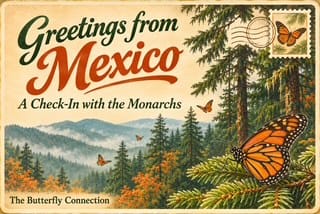
If monarch butterflies in Mexico could send us a postcard, it might read: Made it to the mountains. Looking for a good branch.
For anyone who watched a monarch drift through the garden this fall, there’s something satisfying about finding out where that flight leads. The eastern monarch migration brings butterflies to the mountains of central Mexico, where many will spend the winter among evergreen branches. But the first monarchs to reach the mountains in fall look quite different from the great orange clusters we see in winter photos.
What are monarch butterflies in Mexico doing in November?
The first sightings this fall came on October 31. In a field report for Journey North, observer Estela Romero described seeing monarchs fly through the mountains near Sierra Chincua in Michoacán. More passed through over the next couple of hours. Some stopped briefly at flowers before moving on.
At the same time, observers were still reporting monarchs gathering to rest farther north in Mexico and Texas. That’s one of the interesting things about following the migration: on the same day, one butterfly might be making its way through the mountain forests while another is still on the road south. The first sightings tell us the season has begun, but there’s no single arrival day for the whole migration.
How do a few butterflies become a winter colony?
Picture a November afternoon in the forest. You might see a monarch fly past at eye level or catch a flash of orange farther up the slope. Early in the season, the butterflies can be quite active. They move through the forest during the day and begin gathering in smaller groups as they settle in.
As the weather cools, those smaller gatherings typically come together into denser colonies. By December, groups of monarchs can be packed so closely that the outlines of the branches are hard to make out. With their wings folded, the butterflies can look more like dry leaves than the bright orange insects you remember from summer.
The U.S. Geological Survey’s overview of the winter colonies describes this shift from scattered, active butterflies to the dense clusters of midwinter. That’s why the early sightings are worth watching in their own right. November gives us a glimpse of the forest before it looks like the postcards.
Why do monarchs choose these mountain forests?
Mexico may bring to mind warm beaches, but the monarchs’ winter home is high in the mountains. Many gather in stands of oyamel fir, where the air is cool and the dense evergreen canopy helps shelter them from precipitation and extreme temperatures.
Cool conditions help the butterflies stay less active and conserve energy. That matters because there isn’t enough nectar in the wintering forests to feed so many butterflies through the season. Much of the energy they’ll need comes from reserves built up before they arrived. Think of the late flowers along a monarch’s route: those stops help fuel the trip, and the energy the butterflies store can also help carry them through winter.
Do they stay on the same branch all winter?
A colony may look still on a chilly morning, but a sunny spell can change the scene. Some monarchs open their wings to warm up. Others take flight and look for water. Monarch Joint Venture describes how the butterflies may drink from streams or use moisture from dew or fog.
Activity generally picks up as the season warms. By March, the colonies typically begin breaking apart and monarchs start heading north. The butterflies that spent the winter in Mexico begin the spring journey, and their descendants carry the migration farther north in the generations that follow.
For now, though, it’s the beginning of winter in the mountains. If you have a photo of the last monarch you saw this fall, take another look. Maybe it was perched on a zinnia or crossing the road in front of you. You may never know where that particular butterfly went, but the sightings from Mexico give us a way to follow the story after the last flash of orange disappears from the yard.
A little monarch color to carry with you: See the orange and black wing pattern up close in our Resin Encased Monarch Butterfly Necklace.